
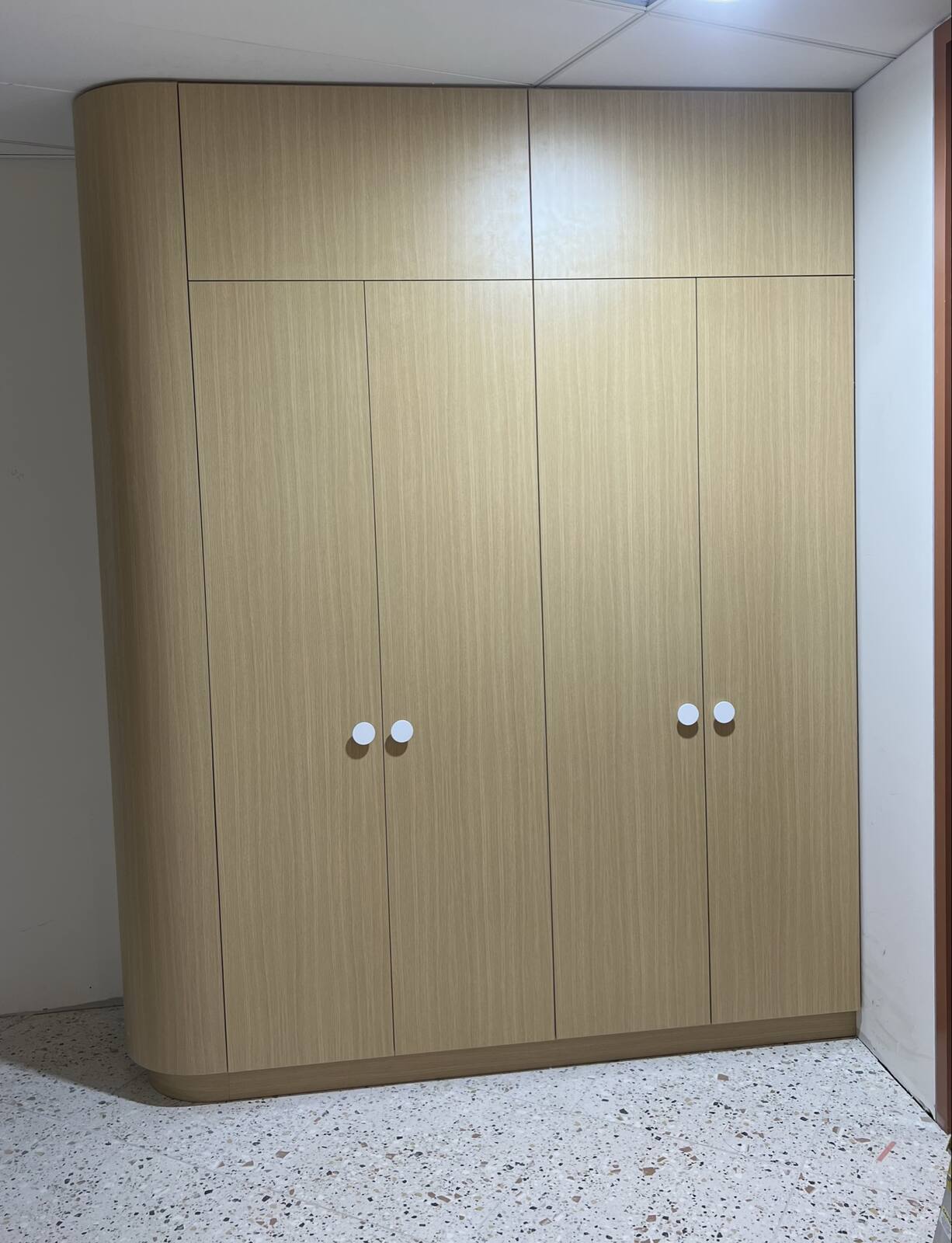
Flat-pack and modular joinery systems have a place in commercial fitouts — but knowing where that place ends is what separates joinery that lasts from joinery that needs replacing within a few years.
Where flat-pack genuinely makes sense
For standard-dimension spaces with tight budgets and fast timelines — a simple staff kitchenette, standard storage cupboards, or back-of-house shelving — modular systems can be a genuinely sensible choice. They're faster to source, cheaper upfront, and perfectly adequate for low-traffic, low-visibility applications where exact fit isn't critical.
Where it fails
Irregular spaces. Commercial tenancies rarely have perfectly square corners or standard wall dimensions. Flat-pack systems are built to standard sizing, which means irregular spaces end up with gap-fillers and filler panels disguising a bad fit — a compromise that's visible from day one.
High-traffic commercial use. Reception desks, retail counters and joinery in high-footfall areas take far more daily wear than residential furniture. Modular systems generally aren't built to the same load and durability standards as joinery constructed specifically for commercial use.
Brand-specific finishes. If your fitout needs to match an exact brand identity — a specific timber tone, a signature colour, a particular hardware finish — modular systems' limited configuration options usually can't deliver it precisely.
Durability and repair considerations
Custom joinery built from solid timber or commercial-grade board with proper edge detailing is generally easier to repair or refinish over time than modular systems, which are often built to be replaced rather than repaired. A single damaged panel on a modular unit may mean sourcing a discontinued part; a custom piece can usually be repaired in place.
The cost-over-time argument
Custom joinery costs more upfront — that's not in dispute. But in commercial settings with genuine daily use, the comparison isn't "cost to install," it's "cost per year of service life." Joinery replaced every three to five years due to wear or poor fit costs more over a ten-year lease than joinery built once, correctly, for the space it's actually going into.
If you're weighing up custom joinery against a modular system for your fitout, our joinery & carpentry team can walk your space and give you a straight assessment of where each option genuinely makes sense.
Planning a joinery & carpentry project in Sydney?
Send through your project details and we'll come back to you within two business days with a fixed-price quote.